Vaping is now part of everyday life for many adults across the UK. It feels cleaner, more controlled, and more flexible than traditional smoking. But one question still confuses: do vapes set off smoke alarms?
It may seem like a small concern, yet setting off an alarm in a flat, office, or hotel room can quickly turn into an awkward situation. Let’s break down how smoke alarms work, why vapour sometimes triggers them, and how you can vape responsibly indoors without problems.
How Smoke Alarms Detect Particles
To understand whether vaping can activate a detector, you first need to know how smoke alarms function.
There are two main types commonly installed in UK buildings:
- Ionisation alarms respond quickly to fast-burning fires and very small combustion particles.
- Photoelectric alarms are more sensitive to thicker, slower-moving particles that scatter light inside the sensor chamber.
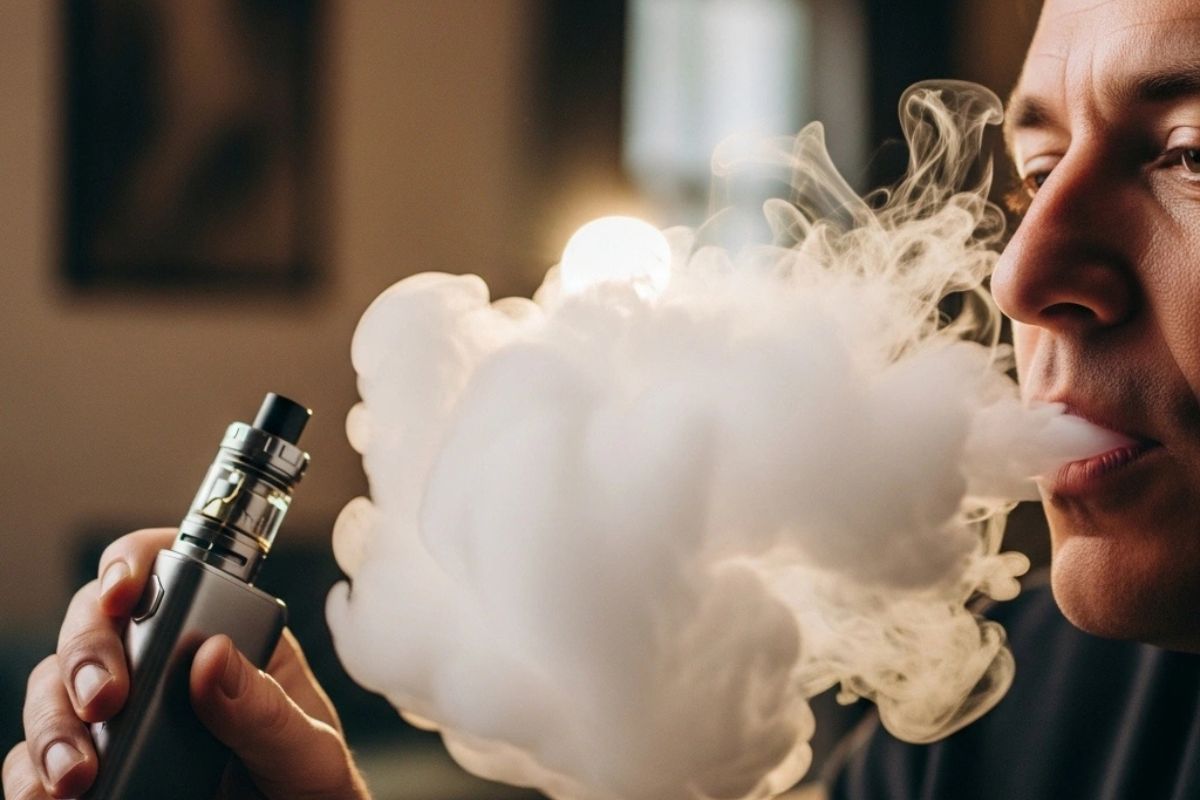
When you vape, you are not producing smoke. Instead, you exhale an aerosol created from heated E-Liquids. Typically containing propylene glycol and vegetable glycerine. This vapour looks like smoke, but chemically and physically it behaves differently.
However, smoke alarms do not analyse what the cloud is made of. They only detect airborne particle density. If enough vapour builds up in a confined space, especially near a photoelectric sensor, the alarm may respond.
Why Vapour Sometimes Triggers Alarms
Vapour can activate a smoke detector under certain conditions. It usually depends on four key factors.
Device power level
High-output devices such as Sub-Ohm Vapes create larger clouds. More vapour in the air increases the likelihood of detection.
E-liquid composition
Liquids with higher vegetable glycerine content, including some 50PG/50VG Liquids, can produce denser clouds that linger longer.
Room ventilation
Poor airflow allows vapour to remain suspended instead of dispersing quickly.
Proximity to the alarm
Exhaling directly underneath a detector dramatically increases the chance of triggering it.
The thicker the cloud and the smaller the space, the higher the risk.
Do All Vaping Devices Carry the Same Risk?
Not necessarily. Vapour output varies widely depending on the device and setup.
A compact VAPE KIT designed for moderate output produces far less airborne density than powerful advanced systems. Likewise, Pod Kits or setups using Refillable Pods are typically designed for controlled vapour rather than cloud production.
On the other hand, large tanks and high-powered setups using advanced airflow systems can generate substantial vapour volume.
Choosing the right configuration plays a significant role in indoor discretion.
Indoor Vaping: How to Reduce the Risk
If you choose to vape indoors where it is permitted, a few practical habits can greatly lower the chances of activating an alarm.
- Keep air circulating. Open a window or switch on a fan to help the vapour disperse quickly.
- Take shorter, controlled puffs instead of deep inhalations that produce thick clouds.
- Avoid standing directly beneath smoke detectors or in tight corners where vapour can collect.
Choose balanced liquids such as Nicotine Salts, which are often used at lower power settings and produce smoother, lighter vapour.
Small adjustments make a noticeable difference.
Understanding Vapour vs Smoke
A common misconception is that vape clouds are simply “water vapour.” While water is part of the mixture, vapour also contains tiny droplets of glycerine and flavour compounds. These droplets can scatter light inside a photoelectric sensor, which explains why alarms may react.
That said, vapour particles evaporate faster and leave far less residue than smoke from combustion. With proper ventilation and mindful usage, activation is uncommon.
The environment plays a bigger role than the device itself.
Choosing the Right Setup for Indoor Comfort
Device configuration matters more than many realise.
A setup using Mouth-to-Lung Tanks generally produces smaller clouds compared to direct-lung high-power systems. Lower wattage devices paired with balanced liquids create smoother, more discreet vapour output.
Meanwhile, advanced hardware like Box Mods is typically designed for higher performance and larger vapour production. While perfectly suitable in appropriate environments, they are not always ideal for confined indoor spaces.
Understanding your device helps you make smarter choices.
Responsible Vaping Indoors
Whether you are at home or in permitted private spaces, always consider:
- Room size
- Airflow
- Device power
- Local building policies
Respect for surroundings ensures a smooth experience.
For those looking to explore reliable devices, balanced liquids, and carefully selected hardware, Vape Deal UK offers a wide range of quality products designed for consistent performance and controlled vapour output.
Final Thoughts
So, do vapes set off smoke alarms?
Sometimes, yes — but usually only when vapour becomes dense in poorly ventilated spaces.
Smoke detectors respond to particle concentration, not intent. By choosing moderate-output devices, using balanced liquids, and keeping air moving, you can greatly reduce the chances of triggering an alarm.
Vaping is meant to be a controlled and informed experience. With the right setup and responsible habits, it remains just that.
Frequently Asked Questions
Q1: Can all smoke alarms detect vapour?
Photoelectric alarms are more likely to respond to dense vapour than ionisation models.
Q2: Does vaping produce smoke?
No. Vaping produces aerosol vapour, which behaves differently from combustion smoke.
Q3: Are high-powered devices more likely to trigger alarms?
Yes. Higher wattage devices generate larger clouds, increasing particle density.
Q4: How can I vape indoors more discreetly?
Use controlled puffs, maintain ventilation, and avoid standing directly under detectors.
Q5: Is there a device that guarantees no alarm activation?
No device can guarantee it, but lower-output setups significantly reduce the risk when used responsibly.